
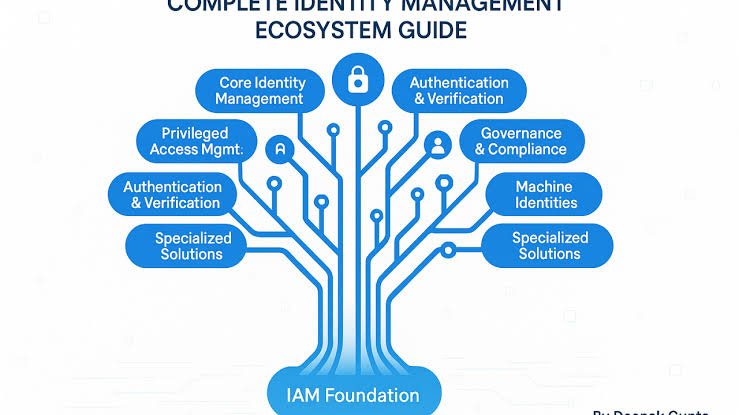
In today’s digital world, almost every organization depends on online systems, cloud applications, databases, and connected devices. Employees need access to business tools, customers log in to websites and mobile apps, and administrators manage sensitive information across multiple platforms. With so many digital identities involved, controlling who can access what has become a major priority. This is where Identity Management plays an important role.
Identity Management is the process of creating, managing, protecting, and controlling digital identities within an organization. It helps businesses make sure that the right people have access to the right resources at the right time. At the same time, it prevents unauthorized users from reaching sensitive systems and information.
As cyber threats continue to grow, identity is now considered one of the most important parts of modern cybersecurity. A strong identity management strategy can reduce security risks, improve productivity, and make it easier for organizations to manage access across different environments.
What Is Identity Management?
Identity Management refers to the policies, technologies, and processes used to manage digital identities and their access to organizational resources.
A digital identity represents a person, employee, customer, application, or device that needs to interact with a system. For example, when an employee receives a company email address and a username for accessing internal software, that information becomes part of their digital identity.
Identity management allows organizations to control the entire identity lifecycle. This usually begins when an account is created and continues as the person’s responsibilities change. When an employee leaves the company, their access can also be removed.
The main goal is simple: make sure authorized users can access what they need while unauthorized users are kept out.
Why Is Identity Management Important?
Organizations handle large amounts of valuable information every day. Customer records, financial information, employee data, intellectual property, and confidential business documents all require protection.
Weak identity controls can create serious security problems. If an employee’s password is stolen, for example, an attacker may be able to access company systems. If former employees continue to have active accounts, they may also create an unnecessary security risk.
Identity Management helps address these problems by providing better control over user accounts and permissions.
It can also improve the employee experience. Instead of remembering separate usernames and passwords for every application, employees can use centralized authentication solutions to access multiple services more conveniently.
For businesses, this combination of security, efficiency, and convenience makes identity management an essential part of digital operations.
Key Components of Identity Management
Identity Management is not based on a single tool. It normally includes several important components that work together.
User Provisioning and Deprovisioning
Provisioning involves creating accounts and assigning the appropriate access when a new employee, customer, or user joins an organization.
Deprovisioning is the opposite process. When someone leaves an organization or no longer needs access to a particular system, their accounts and permissions can be removed.
Automating these processes can reduce human error and prevent unnecessary accounts from remaining active.
Authentication
Authentication is the process of verifying a user’s identity.
A traditional username and password combination is one form of authentication, but organizations can use stronger methods as well. These may include multi-factor authentication, security keys, biometric verification, or authentication applications.
The purpose is to make sure that the person requesting access is actually who they claim to be.
Authorization
Authentication answers the question, “Who are you?”
Authorization answers, “What are you allowed to access?”
Once a user’s identity has been verified, authorization controls determine which applications, files, databases, or services they can use.
For example, an employee in the marketing department may have access to marketing platforms and shared campaign folders, while an accounting employee may have access to financial systems instead.
Single Sign-On
Single Sign-On, commonly known as SSO, allows users to access multiple applications through one set of login credentials.
Instead of entering a password every time they open a different business application, users can authenticate through a centralized identity provider.
SSO can improve convenience while also reducing the number of passwords employees need to remember. When implemented correctly, it can also make account management easier for IT teams.
Role-Based Access Control
Role-Based Access Control, or RBAC, assigns permissions according to a user’s role within an organization.
For instance, a manager may receive different permissions from a regular employee. A system administrator may have broader access because their job requires it.
RBAC helps organizations avoid giving everyone excessive privileges. Users receive access based on their actual responsibilities rather than receiving permissions simply because they requested them.
Identity Management and Cybersecurity
Identity has become a major target for cybercriminals. Attackers often attempt to steal passwords, compromise accounts, or trick users into revealing authentication information.
A strong identity management system can make these attacks more difficult.
Multi-factor authentication is one example. Even if an attacker obtains a user’s password, they may still be unable to access the account without the additional authentication factor.
Identity management can also support monitoring and auditing. Organizations can track login activity, permission changes, and unusual access patterns. This information can help security teams identify suspicious behavior before it develops into a larger incident.
Another important principle is least privilege. Under this approach, users receive only the permissions they actually need to perform their jobs. Limiting unnecessary access reduces the potential damage if an account becomes compromised.
Identity Management in Cloud Environments
The move toward cloud computing has changed how organizations manage identities.
Employees may now work from home, use personal devices, and access cloud-based applications from different locations. At the same time, companies may use dozens or even hundreds of cloud services.
Traditional security models that depend heavily on a company’s physical network are not always sufficient in this environment.
Identity management provides a way to control access regardless of where users or applications are located. Cloud-based identity solutions can help organizations manage accounts, authentication, permissions, and security policies from centralized platforms.
This is particularly useful for companies with remote teams or hybrid workplaces.
Benefits of Identity Management
A well-designed identity management strategy can provide several advantages.
Improved security: Strong authentication and controlled permissions can reduce unauthorized access.
Better productivity: Employees can quickly access the tools they need without dealing with unnecessary login processes.
Reduced administrative workload: Automation can simplify account creation, access changes, and account removal.
Better compliance: Many industries have requirements related to data protection and access control. Identity management can help organizations demonstrate that appropriate controls are in place.
Lower risk: Limiting access and removing inactive accounts can reduce opportunities for attackers.
Better user experience: Features such as SSO and self-service password management can make everyday digital interactions easier.
Common Challenges in Identity Management
Although identity management offers many benefits, implementing it can be challenging.
One common problem is dealing with legacy systems. Older applications may not support modern authentication standards, making integration difficult.
Another challenge is managing large numbers of users and permissions. As organizations grow, manually controlling access becomes increasingly complicated.
Poorly defined access policies can also create problems. If users receive too many permissions, security risks increase. If they receive too few, productivity may suffer because employees cannot access the resources they need.
Organizations must also consider privacy. Identity systems contain sensitive information, so they need to be properly secured and managed.
For these reasons, identity management should be treated as an ongoing process rather than a one-time technology installation.
Best Practices for Effective Identity Management
Organizations can improve their identity management programs by following several practical principles.
First, they should maintain an accurate inventory of users, accounts, applications, and devices. It is difficult to control identities when an organization does not know what accounts exist.
Second, strong authentication should be used for important systems. Multi-factor authentication is especially valuable for protecting sensitive accounts.
Third, organizations should regularly review permissions. Employees change positions, projects end, and responsibilities evolve. Access should change accordingly.
Fourth, inactive and unnecessary accounts should be removed promptly. Old accounts can become attractive targets for attackers.
Finally, identity-related activity should be monitored. Logging and regular reviews can help organizations identify unusual behavior and respond to potential threats.
The Future of Identity Management
Identity management is continuing to evolve as technology changes.
Artificial intelligence and behavioral analytics may help security teams identify unusual login patterns and potentially risky activities. Passwordless authentication is also becoming more common as organizations look for safer and more convenient alternatives to traditional passwords.
Zero Trust security is another major development. Instead of automatically trusting users or devices because they are inside a particular network, Zero Trust requires access to be continuously evaluated based on identity, device condition, context, and other factors.
As businesses continue adopting cloud services, remote work, mobile applications, and connected devices, identity will remain at the center of cybersecurity.
Frequently Asked Questions About Identity Management
1. What is Identity Management in simple words?
Identity Management is the process of managing digital identities and controlling access to systems, applications, and information. It makes sure that the right users have appropriate access while unauthorized individuals are blocked.
2. What is the main purpose of Identity Management?
The main purpose is to protect digital resources by verifying users and controlling what they are allowed to access. It also helps organizations manage accounts efficiently throughout their lifecycle.
3. How does Identity Management improve security?
It improves security through stronger authentication, controlled permissions, multi-factor authentication, access reviews, and account monitoring. These measures can reduce the risk of unauthorized access and compromised accounts.
4. What is the difference between authentication and authorization?
Authentication verifies who a user is, while authorization determines what that user is allowed to do after their identity has been verified.
5. Is Single Sign-On part of Identity Management?
Yes. Single Sign-On is commonly included in identity management strategies. It allows users to authenticate once and access multiple authorized applications without repeatedly entering separate login credentials.
6. Why is Identity Management important for cloud applications?
Cloud applications can be accessed from many locations and devices. Identity management helps organizations centrally control who can access these applications and what permissions they receive.
7. What is Role-Based Access Control?
Role-Based Access Control assigns permissions according to a person’s organizational role. This helps ensure that users receive access appropriate to their responsibilities instead of receiving unnecessary privileges.
8. What is the future of Identity Management?
The future is likely to include more passwordless authentication, Zero Trust security, automated access decisions, behavioral analysis, and AI-supported threat detection. These technologies can make digital identity systems more secure and easier to manage.
Conclusion
Identity Management is a fundamental part of modern digital security. It helps organizations control digital identities, verify users, manage permissions, and protect valuable resources from unauthorized access.
From authentication and authorization to SSO, RBAC, provisioning, and access monitoring, identity management brings different security processes together. When implemented properly, it can improve both security and productivity while reducing administrative complexity.
The most effective approach is not simply to give users access and forget about it. Organizations should continuously review identities, permissions, authentication methods, and account activity. By doing so, they can create a safer digital environment and ensure that access remains aligned with business needs.
As technology becomes more connected and cyber threats become more sophisticated, controlling digital identity will only become more important. For modern organizations, strong identity management is no longer an optional security feature—it is a core part of protecting the digital workplace.