
Cybersecurity has become an essential part of running any modern business. Companies rely on websites, cloud platforms, applications, databases, networks, and connected devices to manage their daily operations. While these technologies improve productivity, they can also create security weaknesses that attackers may exploit. This is where Vulnerability Scanning plays an important role.
Vulnerability scanning is a security process used to identify weaknesses in systems, applications, networks, and devices before cybercriminals can take advantage of them. By regularly scanning digital environments, organizations can discover outdated software, insecure configurations, missing security patches, exposed services, and other potential risks.
For businesses of every size, understanding how vulnerability scanning works and why it matters can make a significant difference in maintaining a strong cybersecurity posture.
What Is Vulnerability Scanning?
Vulnerability scanning is an automated or semi-automated process that examines digital systems for known security weaknesses. Specialized security tools scan computers, servers, websites, applications, networks, and other assets and compare their configurations or software versions against databases of known vulnerabilities.
The goal is not simply to find problems. The main purpose is to give security teams useful information about potential risks so they can prioritize and fix them.
For example, a company may have an old version of a web server installed on one of its systems. If that version contains a publicly known vulnerability, a scanner can detect it and report the issue. Security professionals can then update the software, change the configuration, or take another appropriate action to reduce the risk.
Regular scanning can help organizations identify weaknesses before they become serious security incidents.
Why Is Vulnerability Scanning Important?
Cyber threats continue to evolve, and attackers frequently search for systems that have easily exploitable weaknesses. A single unpatched application or misconfigured server can sometimes provide an entry point into a larger network.
Vulnerability scanning helps organizations take a proactive approach to security. Instead of waiting for an attacker to discover a weakness, security teams can identify potential problems themselves.
There are several important benefits of regular scanning:
- Early identification of security weaknesses: Organizations can discover vulnerabilities before attackers exploit them.
- Better risk management: Security teams can understand which vulnerabilities require immediate attention.
- Improved compliance: Many security standards and regulations encourage or require organizations to conduct regular vulnerability assessments.
- Reduced attack surface: Identifying unnecessary services, exposed systems, and outdated software can help businesses reduce potential entry points.
- Continuous security visibility: Regular scans provide an updated picture of an organization’s security environment.
Most importantly, scanning gives organizations actionable information that can support better security decisions.
How Does Vulnerability Scanning Work?
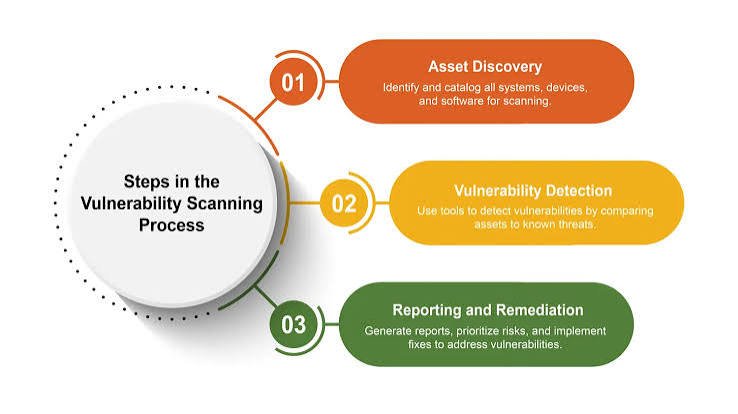
The exact scanning process depends on the technology being assessed, but most vulnerability scanning programs follow several basic steps.
1. Asset Discovery
The first step is identifying the systems that need to be examined. These may include servers, laptops, network devices, cloud resources, websites, databases, and applications.
An organization cannot properly protect assets it does not know about, so maintaining an accurate asset inventory is an important part of the process.
2. Scanning
The security tool examines the selected systems for potential weaknesses. It may check software versions, open ports, system configurations, security settings, certificates, user permissions, and other technical details.
Some scans are performed from outside the network, while others require access from inside the environment.
3. Vulnerability Identification
The scanner compares the information it discovers against vulnerability databases and security rules. If a system matches a known vulnerability, the tool records the finding.
Not every finding has the same level of risk. Some vulnerabilities may be relatively minor, while others could allow unauthorized access or remote code execution.
4. Risk Assessment
After vulnerabilities are identified, security teams usually review their severity and potential business impact.
Factors such as exploitability, affected systems, available security controls, and the importance of the asset can influence how quickly a vulnerability should be addressed.
5. Remediation
The final step is fixing the identified weaknesses. This may involve installing security patches, updating software, changing configurations, removing unnecessary services, improving access controls, or applying other security measures.
After remediation, organizations can perform another scan to confirm that the issue has been resolved.
Types of Vulnerability Scanning
Vulnerability scanning can be performed in different ways depending on what an organization wants to evaluate.
Network Vulnerability Scanning
Network scanning focuses on devices and services connected to a network. It can identify open ports, outdated software, weak configurations, and other network-related security issues.
This type of scanning is useful for organizations that operate internal networks, data centers, or large numbers of connected devices.
Web Application Scanning
Web application scanners examine websites and web-based applications for common security problems. These may include issues involving authentication, input validation, insecure configurations, and other weaknesses.
Because web applications are frequently exposed to the internet, regular testing can be especially valuable.
Host-Based Scanning
Host-based scanning examines individual computers, servers, or other devices. It may identify missing patches, vulnerable applications, insecure settings, and local configuration problems.
This approach provides more detailed information about the security condition of individual systems.
Cloud Vulnerability Scanning
As businesses increasingly use cloud platforms, cloud security has become another important area for vulnerability assessment. Cloud scanning can help identify misconfigurations, exposed resources, weak permissions, and vulnerable workloads.
Organizations should consider both traditional infrastructure and cloud environments when developing a security scanning strategy.
Vulnerability Scanning vs. Penetration Testing
Vulnerability scanning and penetration testing are related, but they are not the same thing.
Vulnerability scanning is generally an automated process designed to identify known weaknesses. It can cover large numbers of systems relatively quickly and is often performed regularly.
Penetration testing, on the other hand, involves security professionals attempting to exploit vulnerabilities in a controlled manner. A penetration test can provide deeper insight into how vulnerabilities might actually be used by an attacker and what impact they could have.
In simple terms, vulnerability scanning helps answer:
“What security weaknesses may exist?”
Penetration testing helps answer:
“Can these weaknesses actually be exploited, and what could happen if they are?”
A strong cybersecurity program may use both approaches because they provide different types of security information.
Common Vulnerabilities Found During Scanning
Vulnerability scanners can identify many different types of security issues. Some common examples include outdated operating systems, unpatched applications, weak encryption settings, unnecessary open ports, insecure network services, expired certificates, and configuration errors.
Another common issue is the use of software versions that are no longer supported by their developers. Unsupported software may not receive important security updates, making it a greater security risk over time.
Scanners can also identify vulnerabilities associated with known security advisories and publicly documented flaws.
However, automated tools are not perfect. A scan may sometimes report a vulnerability that does not represent a real-world risk in a particular environment. This is why security professionals should review findings rather than blindly treating every scanner result as equally urgent.
Best Practices for Effective Vulnerability Scanning
Simply running a scanner once is not enough to maintain strong security. Organizations should develop a consistent vulnerability management process.
First, scans should be performed regularly. The appropriate frequency depends on the organization’s environment, risk level, and regulatory requirements.
Second, organizations should prioritize vulnerabilities based on risk rather than trying to fix every finding at the same time. Critical weaknesses affecting internet-facing systems may deserve immediate attention.
Third, security teams should keep their scanning tools and vulnerability databases updated. New vulnerabilities are discovered regularly, so outdated scanning tools may fail to identify important threats.
It is also important to validate significant findings. Security professionals should investigate whether a reported vulnerability is actually present and determine its potential business impact.
Finally, organizations should rescan systems after remediation. This confirms whether the security issue has been properly addressed.
Challenges of Vulnerability Scanning
Although vulnerability scanning provides significant security benefits, it also has limitations.
Large organizations may have thousands of assets, making it difficult to maintain complete visibility. New devices and applications can also appear frequently, creating gaps in asset inventories.
Another challenge is the number of findings generated by security tools. A large scan may produce hundreds or thousands of results. Without proper prioritization, security teams can become overwhelmed.
False positives are another concern. A scanner may identify a potential vulnerability that does not actually create a meaningful risk in the organization’s specific environment.
Scanning can also affect system performance if it is configured too aggressively. Organizations should carefully plan scans, particularly when testing production systems.
These challenges do not make scanning ineffective. Instead, they highlight the importance of combining automated tools with human analysis and a structured vulnerability management process.
The Role of Vulnerability Scanning in Cybersecurity
Vulnerability scanning should be considered one component of a broader cybersecurity strategy. It works best alongside patch management, endpoint protection, network monitoring, access control, secure development practices, employee security awareness, backups, and incident response planning.
The cybersecurity environment changes constantly. New vulnerabilities are discovered, new systems are deployed, and existing configurations change. Regular scanning helps organizations maintain visibility as their technology environment evolves.
For smaller businesses, even a basic vulnerability scanning program can provide valuable information about weaknesses that might otherwise go unnoticed. Larger organizations can combine scanning with centralized vulnerability management platforms and automated remediation workflows.
The key is consistency. Security is not a one-time project; it is an ongoing process.
Frequently Asked Questions (FAQs)
1. What is Vulnerability Scanning?
Vulnerability scanning is a cybersecurity process that uses specialized tools to identify known security weaknesses in networks, applications, servers, devices, and other digital assets. The results help security teams understand potential risks and determine which issues need to be fixed.
2. How often should vulnerability scanning be performed?
The ideal frequency depends on the organization’s size, risk profile, infrastructure, and compliance requirements. Many organizations perform scans regularly and also conduct additional scans after major system changes, software updates, or newly discovered critical vulnerabilities.
3. Is vulnerability scanning automated?
Yes, most vulnerability scanning is performed using automated security tools. These tools can quickly examine large numbers of systems and compare discovered information with databases of known vulnerabilities. Human review is still important for interpreting results and prioritizing remediation.
4. What does a vulnerability scanner look for?
A scanner can look for outdated software, missing security patches, insecure configurations, exposed services, weak encryption, vulnerable applications, expired certificates, and other known security weaknesses.
5. Can vulnerability scanning prevent cyberattacks?
Vulnerability scanning cannot prevent every cyberattack, but it can reduce security risks by helping organizations discover and address weaknesses before attackers exploit them. It is most effective when combined with other cybersecurity controls and good security practices.
6. What is the difference between vulnerability scanning and penetration testing?
Vulnerability scanning primarily identifies potential security weaknesses using automated tools. Penetration testing involves controlled attempts to exploit vulnerabilities to determine their real-world impact. Both methods can provide valuable but different security insights.
7. Are vulnerability scanning results always accurate?
Not always. Scanners can produce false positives or findings that require additional investigation. Security professionals should validate important results and consider the actual environment, business impact, and existing security controls before deciding how to respond.
8. Why is vulnerability scanning important for businesses?
Vulnerability scanning helps businesses discover security weaknesses, prioritize risks, improve their security posture, and reduce potential attack surfaces. Regular scanning can also support compliance requirements and provide organizations with better visibility into their overall cybersecurity environment.
Conclusion
Vulnerability Scanning is an important cybersecurity practice that helps organizations identify potential weaknesses across their digital environments. By regularly examining networks, applications, servers, devices, and cloud resources, businesses can discover security problems and take corrective action before attackers have an opportunity to exploit them.
However, scanning alone does not guarantee security. Organizations need to review findings, prioritize risks, apply appropriate fixes, and verify that vulnerabilities have been resolved.
When used as part of a comprehensive cybersecurity strategy, vulnerability scanning can improve visibility, strengthen security defenses, support compliance efforts, and reduce the likelihood of successful cyberattacks.