
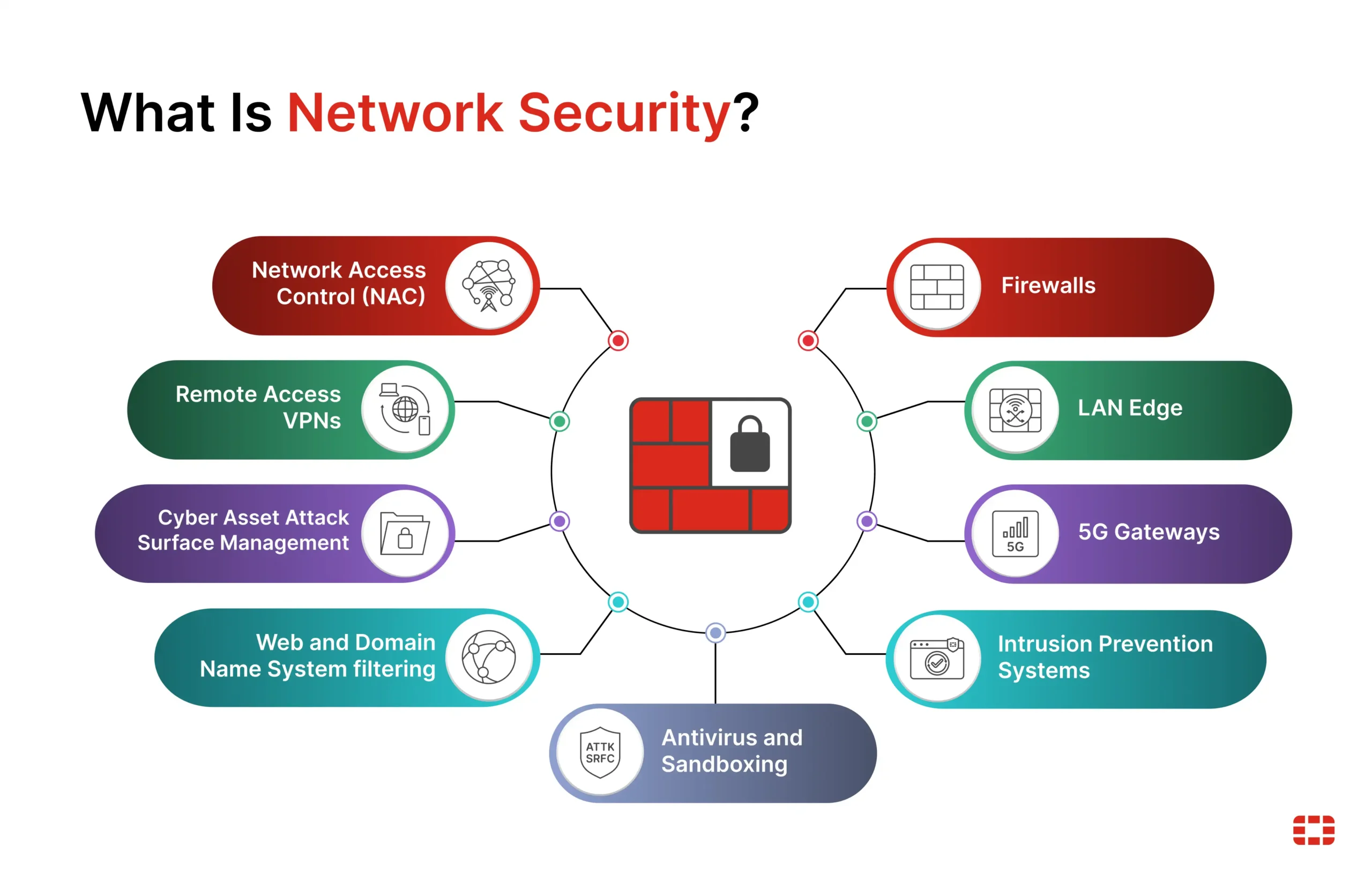
In today’s digital world, almost every business depends on a network to communicate, store information, provide services, and connect employees with customers. From small businesses to large organizations, networks have become an essential part of daily operations. However, as our dependence on technology increases, so does the risk of cyberattacks. This is where Network Security becomes extremely important.
Network security is the process of protecting a computer network from unauthorized access, cyber threats, data theft, malware, and other security risks. It combines different technologies, tools, policies, and practices to keep network infrastructure and the information moving through it safe.
Whether you are running a business network, managing a website, working remotely, or simply using Wi-Fi at home, understanding network security can help you recognize potential risks and take better steps to protect your digital information.
What Is Network Security?
Network security refers to the methods used to protect a network and the devices connected to it. A network can include computers, servers, smartphones, routers, printers, cloud systems, and other connected devices.
The main purpose of network security is to prevent unauthorized people from accessing sensitive systems and information. It also helps organizations maintain the availability and reliability of their networks.
A strong network security strategy generally focuses on three major goals: confidentiality, integrity, and availability.
Confidentiality ensures that sensitive information is only accessible to authorized users. Integrity helps make sure that data is not changed, damaged, or manipulated without permission. Availability means that systems and network resources remain accessible when legitimate users need them.
These three principles form the foundation of an effective security strategy.
Why Is Network Security Important?
The internet has made it easier for businesses and individuals to communicate and share information, but it has also created new opportunities for cybercriminals. Hackers may attempt to steal passwords, financial information, customer records, business documents, or other valuable data.
A successful cyberattack can cause serious financial and reputational damage. For a business, it may also result in downtime, lost customers, legal problems, and the loss of important information.
Network security helps reduce these risks by creating multiple layers of protection. Instead of relying on a single security tool, organizations can combine firewalls, encryption, access controls, monitoring systems, antivirus software, and other security measures.
Good network security is not only about stopping hackers. It is also about making sure that employees, customers, and other authorized users can safely access the resources they need.
Common Network Security Threats
Networks can face many different types of threats. Some attacks are highly technical, while others depend on human mistakes.
Malware is one of the most common threats. It includes malicious programs such as viruses, worms, spyware, and ransomware. Malware can enter a network through infected files, unsafe downloads, compromised websites, or email attachments.
Phishing attacks are another major concern. In a phishing attack, criminals often send fake emails or messages designed to trick people into revealing passwords, financial information, or other sensitive data.
Unauthorized access occurs when someone gains access to a network or system without permission. Weak passwords, stolen credentials, and poorly configured devices can make unauthorized access easier.
Denial-of-service attacks attempt to overwhelm a network or online service with excessive traffic. When successful, these attacks can make websites and applications unavailable to legitimate users.
There are also internal threats. Employees or other authorized users may accidentally expose information, use unsafe devices, or intentionally misuse their access. For this reason, network security must address both external and internal risks.
Important Network Security Measures
Organizations use several security measures to protect their networks. The right combination depends on the size and requirements of the organization.
Firewalls
A firewall acts as a security barrier between trusted and untrusted network traffic. It examines incoming and outgoing connections based on predefined security rules.
Firewalls can help block suspicious traffic while allowing legitimate communication to continue. They can be implemented through hardware, software, or cloud-based services.
Encryption
Encryption protects information by converting readable data into a format that cannot easily be understood without the appropriate key.
It is particularly important when sensitive information is transmitted over a network. Even if an attacker manages to intercept encrypted data, strong encryption can make it much harder to understand.
Access Control
Not every user needs access to every resource. Access control allows organizations to decide who can access specific systems, applications, files, and network services.
Using strong authentication and limiting permissions can significantly reduce the damage caused by compromised accounts.
Antivirus and Anti-Malware Software
Security software can detect, block, and sometimes remove malicious programs. Keeping this software updated is important because new malware threats appear regularly.
However, antivirus software should not be considered a complete security solution. It works best as part of a broader network security strategy.
Network Monitoring
Continuous monitoring helps security teams identify unusual activity. For example, a sudden increase in network traffic or repeated failed login attempts may indicate a security problem.
Monitoring tools can provide valuable information that allows organizations to investigate potential threats before they become more serious.
The Role of Passwords and Authentication
Passwords remain an important part of network security, but weak passwords can create significant vulnerabilities. Simple passwords, reused credentials, and shared accounts can make it easier for attackers to gain unauthorized access.
Users should create strong and unique passwords for important accounts. Organizations can also use multi-factor authentication, which requires users to provide an additional verification method beyond a password.
For example, a user may need to enter a password and then confirm their identity through an authentication app or another approved method.
Multi-factor authentication adds another layer of protection, particularly when passwords are stolen or exposed.
Network Security for Businesses
For businesses, network security should be treated as an ongoing responsibility rather than a one-time project. Technology changes quickly, and attackers continuously develop new techniques.
Businesses should regularly update operating systems, applications, routers, firewalls, and security software. They should also review user permissions and remove access that is no longer required.
Employee education is equally important. Even sophisticated security systems can be weakened by simple human mistakes. Employees should know how to identify suspicious emails, avoid unsafe links, protect passwords, and report unusual activity.
Regular backups are also valuable. If important files are affected by ransomware or another incident, reliable backups can help an organization recover without losing everything.
Network Security in Remote Work Environments
Remote work has changed the way many organizations approach network security. Employees may connect to company systems from homes, hotels, cafés, or other locations.
Public and poorly secured networks can create additional risks. Businesses can reduce these risks by using secure connections, virtual private networks, strong authentication, endpoint security, and clear remote-work policies.
Employees should also make sure that their home routers and devices are properly secured. Changing default passwords, installing updates, and using secure Wi-Fi settings can help reduce common vulnerabilities.
Best Practices for Better Network Security
Building a secure network does not necessarily require complicated technology. Several basic practices can make a significant difference.
First, keep all software and network devices updated. Security updates often fix vulnerabilities that attackers could otherwise exploit.
Second, use strong passwords and enable multi-factor authentication wherever possible.
Third, limit user permissions. People should generally have only the access they need to perform their responsibilities.
Fourth, monitor network activity and investigate unusual behavior. Early detection can make it easier to respond to security incidents.
Fifth, educate users. Employees and individuals should understand common threats such as phishing, malware, and social engineering.
Finally, create a response and recovery plan. No security system can guarantee that an attack will never happen. Having a plan can help an organization respond quickly and restore normal operations.
The Future of Network Security
As organizations adopt cloud computing, artificial intelligence, Internet of Things devices, and remote working technologies, network security will continue to evolve.
Modern networks are becoming more complex, which means traditional security methods alone may not always be enough. Organizations are increasingly focusing on continuous monitoring, identity-based access, automated threat detection, and zero-trust security approaches.
Artificial intelligence and machine learning can also help security teams analyze large amounts of network activity and identify unusual patterns. At the same time, cybercriminals are using advanced technologies to improve their own attacks.
This ongoing competition means network security will remain an important part of modern technology for years to come.
Frequently Asked Questions
1. What is Network Security in simple words?
Network security is the practice of protecting computer networks and connected devices from unauthorized access, cyberattacks, malware, and data theft. It uses different technologies and security practices to keep information and network resources safe.
2. Why is Network Security important for businesses?
Network security helps businesses protect sensitive information, customer data, financial records, applications, and internal systems. Strong security can also reduce downtime, prevent unauthorized access, and protect a company’s reputation.
3. What are the most common Network Security threats?
Common threats include malware, phishing, ransomware, unauthorized access, denial-of-service attacks, weak passwords, and human error. Businesses may also face insider threats from employees or other authorized users.
4. How can I improve Network Security?
You can improve network security by using strong and unique passwords, enabling multi-factor authentication, keeping software updated, securing Wi-Fi networks, using firewalls and security software, limiting access permissions, and avoiding suspicious links and attachments.
5. Is Network Security only important for large companies?
No. Network security is important for businesses of every size as well as individual users. Small businesses and home users can also become targets of cyberattacks, so basic security measures are valuable regardless of the size of the network.
Conclusion
Network security is essential for protecting digital systems, information, and connected devices from a wide range of threats. Whether the network belongs to a small business, a large organization, or a home user, basic security practices can significantly reduce potential risks.
Firewalls, encryption, access controls, strong authentication, monitoring, software updates, employee awareness, and regular backups all play important roles in creating a safer network environment.
The most important thing to remember is that network security is not a single product or tool. It is a combination of technology, people, policies, and continuous attention. By understanding common threats and following practical security practices, individuals and organizations can build stronger defenses and protect the information that matters most.