
Malware has become one of the biggest cybersecurity challenges for individuals, businesses, and organizations around the world. Every day, cybercriminals create new malicious programs designed to steal information, damage systems, spy on users, or gain unauthorized access to networks. Because modern malware can be highly sophisticated, simply detecting a suspicious file is often not enough. Security professionals need to understand what the malware does, how it behaves, where it came from, and how it can be stopped.
This is where Malware Analysis plays an important role. It is a cybersecurity process used to examine malicious software and understand its characteristics, behavior, purpose, and potential impact. By analyzing malware carefully, security teams can develop better defenses, identify compromised systems, and respond to attacks more effectively.
What Is Malware Analysis?
Malware Analysis is the process of studying malicious software to understand how it works and what it is designed to accomplish. Malware can include viruses, worms, Trojans, ransomware, spyware, keyloggers, rootkits, and many other types of harmful software.
During an analysis, cybersecurity professionals may examine a suspicious file, investigate its code, observe how it behaves on a system, and identify the resources it attempts to access. The information collected can then help security teams create detection rules, remove infections, and prevent similar attacks in the future.
The main objective is not simply to determine whether a file is malicious. A detailed analysis can reveal much more, including the malware’s capabilities, communication methods, persistence techniques, and possible connection to a particular cyberattack.
Why Is Malware Analysis Important?
Cyberattacks are becoming more complex, and attackers frequently modify their malware to avoid traditional security solutions. Malware Analysis helps organizations look beyond basic detection and understand the actual threat.
One major benefit is faster incident response. When security analysts understand how malware operates, they can determine which systems may have been affected and take appropriate action.
It also helps organizations identify indicators of compromise, such as suspicious domains, IP addresses, file hashes, registry changes, or unusual processes. These indicators can be used to search for additional infected devices across a network.
Another important benefit is threat intelligence. By analyzing malware samples, researchers can learn about attacker techniques and improve defensive strategies. This information can also help organizations prepare for future attacks.
Main Types of Malware Analysis
There are several approaches to analyzing malicious software. The most common methods are static analysis, dynamic analysis, and hybrid analysis.
Static Malware Analysis
Static analysis examines a malware sample without actually running it. Analysts inspect the file’s structure, strings, metadata, libraries, and other characteristics to identify suspicious behavior.
For example, an analyst may look for unusual file names, embedded URLs, suspicious commands, or references to system functions. Static analysis is generally safer because the malicious program is not executed.
However, modern malware can use techniques such as encryption, obfuscation, and packing to hide important information. As a result, static analysis may sometimes provide limited visibility.
Dynamic Malware Analysis
Dynamic analysis involves executing the malware in a controlled and isolated environment, commonly called a sandbox. Analysts then monitor what the program does while it is running.
They may observe file creation, network connections, process activity, registry modifications, memory changes, and other system behavior.
Dynamic analysis can provide valuable information about the malware’s real-world behavior. However, it must be performed carefully because running malicious software on an unsecured system can cause serious damage.
Hybrid Analysis
Hybrid analysis combines static and dynamic techniques. Analysts first inspect the sample without execution and then observe its behavior in a controlled environment.
This approach can provide a more complete understanding of complicated malware. Static analysis can reveal hidden clues in the file, while dynamic analysis shows what happens when the malware actually runs.
How Does Malware Analysis Work?
The malware analysis process usually follows several stages.
First, analysts collect and preserve the suspicious sample. It is important to maintain the original sample because changing the file may affect the investigation.
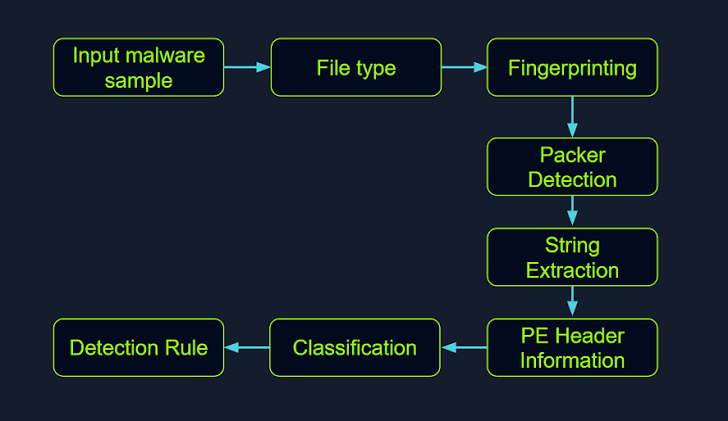
Next, analysts perform an initial examination. They may calculate a file hash, check its type and size, inspect metadata, and search for suspicious strings or known indicators.
After that, more detailed analysis can begin. If appropriate, the sample may be executed in an isolated environment. Analysts monitor its activity and record important events.
The collected information is then analyzed to determine the malware’s purpose and capabilities. For example, an investigation may discover that a malicious program attempts to steal browser credentials, communicate with a remote server, or create persistence on an infected computer.
Finally, security teams document their findings and use them to improve detection and response mechanisms.
Common Techniques Used in Malware Analysis
Security researchers use a variety of techniques when examining malicious software.
File and hash analysis can help identify whether a sample is already known. Hash values provide a unique representation of a file and can be compared with threat intelligence databases.
String analysis involves searching a malware sample for readable information. Analysts may discover URLs, IP addresses, error messages, file paths, commands, or other useful clues.
Behavioral analysis focuses on what malware does when executed. This may include monitoring processes, files, network traffic, and system changes.
Code analysis can help researchers understand the logic and functionality of malware. In more advanced investigations, analysts may examine machine instructions or reverse-engineer parts of the program.
These techniques are often used together because no single method can reliably reveal everything about a sophisticated malware sample.
Challenges in Malware Analysis
Although Malware Analysis is extremely useful, it can be difficult. Cybercriminals actively develop techniques to make their malware harder to investigate.
One common challenge is obfuscation. Malware authors may deliberately make code difficult to understand by changing its structure or encrypting important information.
Another challenge is packing, where malware is compressed or protected so that its actual code is difficult to inspect.
Some malware can also detect virtual machines or sandboxes. If it realizes that it is being analyzed, it may stop performing malicious actions or behave differently.
Polymorphic and metamorphic malware creates additional problems by changing parts of its code while maintaining its core functionality. This can make traditional signature-based detection less effective.
Because of these challenges, analysts need strong technical knowledge, appropriate tools, and a carefully designed investigation environment.
Tools Used for Malware Analysis
Security professionals have access to many tools that can assist with malware investigations. The exact tools used depend on the type of sample and the goals of the investigation.
Static analysis tools can help researchers inspect executable files, strings, libraries, and program structures. Debuggers and reverse-engineering tools can provide deeper visibility into how a program operates.
Network monitoring tools can help analysts identify connections made by malware, while system monitoring tools can reveal changes to files, processes, and other system components.
Sandbox environments are also widely used because they allow suspicious software to be observed in an isolated setting.
The most important factor, however, is not the tool itself. Experienced analysts need to understand what the collected information means and how different observations relate to one another.
Malware Analysis in Incident Response
Malware Analysis is particularly valuable during cybersecurity incidents. When an organization discovers an infected computer, analysts need to determine how the malware entered the environment and what it did after execution.
For example, if ransomware is discovered on one workstation, analyzing the sample may reveal whether it attempted to communicate with other systems or establish persistence.
The findings can help security teams identify additional compromised machines and determine the scope of an attack. Analysts can also develop detection rules based on the malware’s behavior and indicators.
This makes malware analysis an important part of a broader incident response process rather than an isolated technical activity.
How Organizations Can Benefit From Malware Analysis
Organizations of all sizes can benefit from understanding malware threats. Large enterprises may have dedicated security research teams, while smaller organizations can rely on managed security services and specialized cybersecurity professionals.
Regular malware analysis can help organizations improve endpoint protection, network monitoring, threat detection, and incident response procedures.
It can also support employee security awareness. If an investigation shows that infections commonly begin through malicious email attachments or fake software downloads, organizations can use that information to educate employees and strengthen security policies.
Ultimately, the goal is to move from simply reacting to malware infections toward understanding and preventing them.
The Future of Malware Analysis
As cyber threats continue to evolve, malware analysis is also becoming more advanced. Automation and artificial intelligence are increasingly being used to process large numbers of suspicious samples and identify unusual behavior.
Automated systems can help security teams prioritize samples and quickly extract useful indicators. However, human expertise remains important, especially when dealing with highly sophisticated or previously unknown threats.
Future malware analysis will likely combine automated detection, behavioral monitoring, threat intelligence, and expert investigation. This combination can help organizations respond to threats faster while improving their overall cybersecurity posture.
Frequently Asked Questions
1. What is Malware Analysis?
Malware Analysis is the process of examining malicious software to understand its purpose, behavior, capabilities, and potential impact. It helps cybersecurity professionals detect threats and respond to infections effectively.
2. Why is Malware Analysis important?
It helps security teams understand how malware operates, identify indicators of compromise, investigate attacks, and develop better security controls. It is especially useful during incident response and threat investigations.
3. What are the main types of Malware Analysis?
The three common approaches are static analysis, dynamic analysis, and hybrid analysis. Static analysis examines malware without executing it, dynamic analysis observes it while running in a controlled environment, and hybrid analysis combines both methods.
4. Can Malware Analysis detect ransomware?
Yes. Malware Analysis can help researchers identify ransomware behavior, including file encryption, system changes, network.
Conclusion
Malware Analysis is an essential part of modern cybersecurity. It helps security professionals understand malicious software, investigate attacks, identify compromised systems, and develop stronger defenses.
Static analysis can provide valuable information without executing a sample, while dynamic analysis allows researchers to observe actual malware behavior in a controlled environment. Combining these approaches can provide a deeper understanding of complex threats.
As attackers continue to develop new techniques, organizations must improve their ability to investigate and respond to malicious software. Malware analysis provides the knowledge needed to turn a suspicious file into actionable security intelligence, making it an important skill for cybersecurity professionals and an important defense for organizations.