
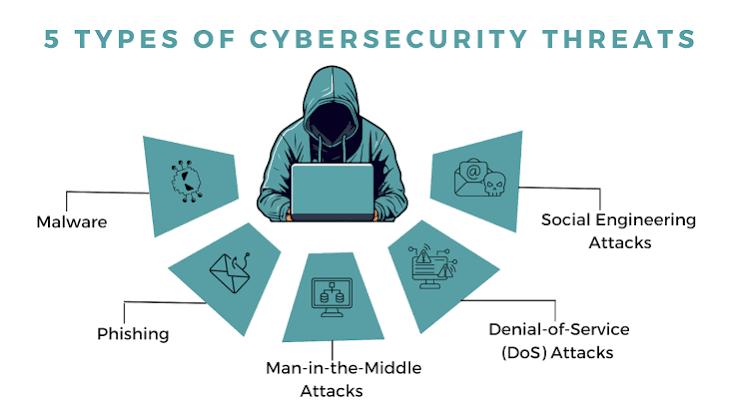
In today’s connected world, security threats have become a major concern for individuals, businesses, and organizations of every size. People use the internet for almost everything, from online banking and shopping to communication, entertainment, education, and work. While technology has made life easier, it has also created new opportunities for criminals and malicious actors to exploit weaknesses.
A security threat is any potential danger that can compromise the safety, privacy, or integrity of information, systems, devices, or people. These threats can come in many forms, including cyberattacks, malware, phishing scams, stolen passwords, data breaches, and even physical security problems. Understanding these risks is the first step toward protecting valuable information and reducing the chances of becoming a victim.
What Are Security Threats?
Security threats refer to situations, actions, or events that may cause harm to a computer system, network, organization, or individual. Some threats are designed to steal sensitive information, while others attempt to damage systems, interrupt services, or gain unauthorized access.
Not every security threat is highly sophisticated. In many cases, attackers take advantage of simple mistakes, such as weak passwords, outdated software, or clicking on an unfamiliar link. This is why security is not only a technical issue. Human behavior also plays an important role.
As technology continues to develop, security threats are becoming more diverse. Criminals constantly look for new ways to exploit vulnerabilities, making it important for users to remain informed and cautious.
Common Types of Security Threats
There are many different types of security threats, but some are more common than others.
Malware
Malware is one of the most widespread security threats. The term refers to malicious software created to damage systems, steal information, monitor activity, or gain unauthorized access.
Viruses, worms, spyware, and ransomware are all examples of malware. Ransomware, in particular, can be extremely damaging because it can lock or encrypt files and demand payment from the victim.
Malware may enter a device through malicious downloads, infected websites, email attachments, or compromised applications. Keeping software updated and avoiding suspicious files can significantly reduce the risk.
Phishing Attacks
Phishing is another major security threat that relies heavily on human error. In a typical phishing attack, a criminal sends a fake email, message, or website designed to look legitimate. The goal is usually to convince the victim to provide sensitive information, such as a password, credit card number, or login details.
For example, a phishing email may appear to come from a bank and warn the recipient that their account will be suspended unless they verify their information. The provided link may lead to a fake website controlled by the attacker.
Phishing attacks can be difficult to recognize because criminals often copy logos, language, and designs from trusted companies.
Weak and Stolen Passwords
Passwords remain one of the simplest but most important parts of digital security. Using the same password for multiple accounts can create a serious problem. If one account is compromised, attackers may try the stolen password on other services.
Short and predictable passwords are also easier to guess or crack. A strong password should generally be long, unique, and difficult to predict. Using a reputable password manager can make it easier to manage different passwords without having to memorize all of them.
Multi-factor authentication provides another layer of protection by requiring an additional verification method beyond a password.
Data Breaches
A data breach occurs when unauthorized individuals gain access to information that should be protected. Depending on the organization, compromised information could include names, email addresses, passwords, financial information, business records, or other sensitive data.
Data breaches can result from hacking, stolen credentials, vulnerable software, insider mistakes, or poor security practices. The consequences can be serious, including financial losses, identity theft, legal problems, and damage to an organization’s reputation.
Social Engineering
Social engineering attacks target people rather than technology itself. Attackers manipulate individuals into revealing confidential information or performing actions that compromise security.
A criminal might pretend to be a customer service representative, colleague, manager, or IT employee. By creating a sense of urgency or trust, the attacker attempts to persuade the victim to share information or provide access.
This type of threat demonstrates why security awareness is just as important as technical protection.
Why Security Threats Are Increasing
The growth of connected devices is one reason security risks continue to expand. Smartphones, laptops, smart home devices, cloud platforms, business applications, and other systems are connected to the internet. Every connected device or service can potentially introduce another point that needs protection.
Remote work has also changed the security landscape. Employees may access company systems from homes, cafes, airports, and other locations. Personal devices and home networks may not have the same security controls as corporate environments.
At the same time, attackers are becoming more organized. Cybercriminals can use automated tools and increasingly sophisticated techniques to target large numbers of people. This means that security threats are no longer limited to large corporations or government organizations. Small businesses and individual users can also become targets.
The Impact of Security Threats
The consequences of a security incident can extend far beyond the immediate loss of information.
For individuals, security problems can lead to identity theft, financial fraud, privacy violations, and loss of personal files. Recovering compromised accounts can also take considerable time and effort.
For businesses, the impact can be even broader. A successful attack may interrupt operations, expose customer information, cause financial losses, and damage the company’s reputation. Customers may lose confidence in an organization if their personal information is not properly protected.
Some incidents can also result in regulatory or legal consequences, especially when organizations fail to protect sensitive information appropriately.
How to Protect Against Security Threats
Although no security strategy can guarantee complete protection, several practical steps can greatly reduce risk.
First, keep operating systems, applications, browsers, and security software updated. Software updates often include fixes for vulnerabilities that attackers could otherwise exploit.
Second, use strong and unique passwords for important accounts. Where available, enable multi-factor authentication. This can make unauthorized access significantly more difficult even if a password is stolen.
Third, be careful with unexpected emails, text messages, and links. Before clicking, consider whether the message is genuine. Avoid providing sensitive information through links or messages when you are unsure about the sender.
Regular backups are also essential. Important files should be backed up to a secure location so they can be recovered if a device is damaged, lost, or affected by ransomware.
Businesses should also provide security awareness training to employees. Employees need to understand common threats, recognize suspicious activity, and know how to report potential incidents.
The Importance of Security Awareness
Technology alone cannot solve every security problem. Even the most advanced security tools can be undermined by a simple human mistake.
Security awareness means understanding how threats work and knowing how to respond appropriately. People should learn to recognize suspicious messages, protect their login credentials, avoid unknown downloads, and report unusual activity.
Organizations can build stronger security cultures by providing regular training instead of treating cybersecurity as a one-time lesson. Employees should feel comfortable reporting mistakes or suspicious incidents without fear of unnecessary punishment. Early reporting can sometimes prevent a small problem from becoming a major security incident.
Security Threats in the Future
Security threats will continue to evolve as technology changes. Artificial intelligence, cloud computing, connected devices, and automation offer many benefits, but they can also introduce new risks.
Attackers may use advanced technologies to create more convincing scams, automate attacks, or discover weaknesses more efficiently. At the same time, security professionals are developing new technologies and strategies to defend against these risks.
The future of security will therefore depend on continuous improvement. Individuals and organizations cannot simply establish security measures once and assume they will remain effective forever. Regular updates, monitoring, education, and risk assessments are necessary.
Final Thoughts
Security threats are now a part of everyday digital life. From phishing emails and malware to data breaches and social engineering, there are many ways that sensitive information and systems can be compromised. However, understanding these threats can make a significant difference.
Good security starts with simple habits: use strong passwords, enable multi-factor authentication, keep software updated, think carefully before clicking unfamiliar links, and maintain reliable backups. Businesses should go further by training employees, protecting networks, monitoring systems, and developing plans for responding to incidents.
The goal is not to become afraid of technology. Instead, the goal is to use technology responsibly and understand the risks that come with it. As security threats continue to change, staying informed and maintaining good security practices will remain one of the most effective ways to protect personal information, business operations, and digital identities.