
In today’s digital world, data has become one of the most valuable resources for individuals and businesses. Every time we create an account, make an online purchase, send an email, use a mobile application, or visit a website, we share some form of personal information. This information can include names, phone numbers, addresses, passwords, financial details, photographs, and even location data. Protecting this information is no longer optional. It has become an essential part of using technology safely and responsibly.
Data protection refers to the practices, technologies, policies, and procedures used to keep personal and sensitive information safe from unauthorized access, theft, misuse, loss, or accidental disclosure. Effective data protection helps people maintain their privacy while allowing organizations to use information responsibly.
As cyber threats continue to evolve, understanding how data protection works can help individuals and businesses make better decisions about their digital security.
What Is Data Protection?
Data protection is the process of safeguarding information from unauthorized access, alteration, destruction, or disclosure. It covers both digital and physical information.
For example, a company may protect customer information by using strong passwords, encryption, access controls, secure servers, and regular backups. An individual may protect personal data by using unique passwords, enabling two-factor authentication, and being careful about the information they share online.
Data protection is closely connected to privacy, but the two concepts are not exactly the same. Privacy is mainly concerned with how personal information is collected, used, and shared, while data protection focuses on the security and proper handling of that information.
Why Is Data Protection Important?
The importance of data protection has increased significantly because so much personal and business information is now stored online.
A data breach can expose sensitive information to criminals. Stolen passwords, financial details, or identity documents can be used for fraud, identity theft, financial crimes, and other harmful activities.
For businesses, poor data protection can have even wider consequences. A security incident may result in financial losses, legal problems, damaged customer relationships, and harm to a company’s reputation.
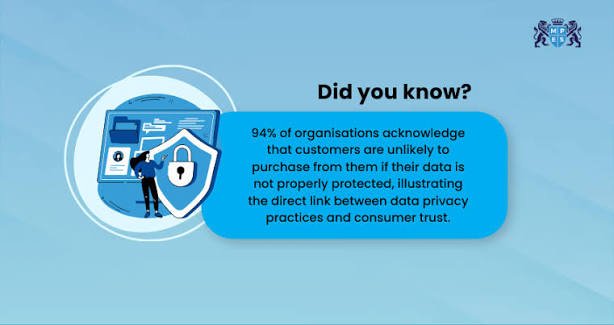
Customers expect businesses to take their information seriously. When an organization demonstrates strong data protection practices, it can build trust and confidence among its customers and employees.
Common Types of Data
Not all data has the same level of sensitivity. Understanding different types of information can help organizations decide how much protection is required.
Personal data includes information that can identify an individual, such as a name, email address, phone number, or home address.
Financial data includes bank account information, payment details, and transaction records. This type of information is particularly attractive to cybercriminals.
Health information can include medical records, diagnoses, prescriptions, and insurance information. Such data is highly sensitive and usually requires strong security measures.
Business data may include confidential documents, customer databases, product plans, employee information, and financial reports.
Protecting each category properly is important because the consequences of exposure can vary depending on the type of information involved.
Common Threats to Data Security
There are many ways data can be compromised. Some attacks are highly technical, while others rely on simple human mistakes.
One common threat is phishing. In a phishing attack, criminals send fake emails or messages designed to trick people into revealing passwords, financial information, or other sensitive details.
Malware is another major threat. Malicious software can infect computers and mobile devices, potentially allowing attackers to steal, modify, or destroy information.
Weak passwords also create serious security risks. Passwords that are short, predictable, or reused across multiple accounts can make it easier for attackers to gain unauthorized access.
Human error is another important factor. Sending a confidential document to the wrong person, losing a company laptop, or accidentally exposing a database can lead to a data breach even without a sophisticated cyberattack.
How Does Data Protection Work?
Effective data protection usually involves several layers of security rather than relying on a single tool.
One of the most important methods is encryption. Encryption converts information into an unreadable format so that unauthorized users cannot easily understand it. The information can only be converted back into its original form with the appropriate key or credentials.
Access control is another essential component. Organizations should ensure that employees can only access the information they actually need for their jobs. Limiting access reduces the potential damage if an account is compromised.
Regular data backups are also important. If information is accidentally deleted, damaged, or affected by ransomware, a secure backup can help restore it.
Organizations should also keep software and operating systems updated. Security updates often fix vulnerabilities that attackers could otherwise exploit.
Data Protection for Businesses
Businesses of every size need a clear approach to protecting information. A small company may assume that cybercriminals will not target it, but smaller organizations can still be attractive targets because they may have weaker security systems.
The first step is to identify what information the business collects and where that information is stored. Companies should then determine who has access to it and whether that access is necessary.
Employee training is equally important. Staff members should understand how to recognize suspicious emails, create strong passwords, handle confidential documents, and report possible security incidents.
Businesses should also develop a data breach response plan. If a security incident occurs, employees need to know who to contact, what systems should be isolated, and how the organization will communicate with affected parties.
Data Protection for Individuals
Individuals can take several simple steps to improve their personal data security.
Using a different, strong password for each important account is one of the easiest improvements. A password manager can make it easier to create and remember unique passwords.
Two-factor authentication provides another layer of protection. Even if someone discovers a password, they may still be unable to access the account without the second authentication method.
People should also be cautious when clicking links in emails or messages. If a message asks for sensitive information or creates a sense of urgency, it is worth verifying the request through an official channel.
Public Wi-Fi should also be used carefully, particularly when accessing sensitive accounts. Keeping devices updated and using reputable security software can provide additional protection.
The Role of Data Protection Laws
Governments and regulatory bodies around the world have introduced laws and regulations designed to protect personal information. These rules can establish requirements for how organizations collect, store, process, and share personal data.
Depending on where a business operates and where its customers are located, different privacy and data protection requirements may apply.
Organizations should understand the legal obligations relevant to their operations and make sure their policies and security practices are appropriate. Compliance is important, but businesses should not view it as the only reason to protect information. Good data protection is also essential for maintaining customer trust and reducing security risks.
The Future of Data Protection
Technology is developing rapidly, and data protection needs to evolve alongside it. Artificial intelligence, cloud computing, connected devices, and other digital technologies create new opportunities but also introduce new security challenges.
Organizations are increasingly using automated security systems to detect unusual activity and identify potential threats. At the same time, attackers are also using advanced technologies to create more convincing scams and automate certain types of attacks.
This means data protection will continue to require a combination of technology, responsible policies, employee awareness, and good security habits.
Frequently Asked Questions
1. What is data protection in simple words?
Data protection means keeping personal, business, and sensitive information safe from unauthorized access, theft, loss, misuse, or accidental disclosure. It involves using security tools, policies, and responsible practices to protect information.
2. Why is data protection important?
Data protection is important because personal and business information can be misused if it falls into the wrong hands. Strong protection can reduce the risk of identity theft, fraud, financial loss, cyberattacks, and reputational damage.
3. How can I protect my personal data?
You can protect your personal data by using strong and unique passwords, enabling two-factor authentication, keeping your devices and applications updated, avoiding suspicious links, limiting the information you share online, and using secure networks when handling sensitive information.
4. What is the difference between data protection and data privacy?
Data privacy focuses on how information is collected, used, stored, and shared, while data protection focuses more on securing that information against unauthorized access, loss, damage, or misuse. Both are important parts of responsible information management.
5. What should a business do to improve data protection?
A business should identify the information it holds, restrict access to sensitive data, use encryption and secure backups, train employees, keep systems updated, monitor for suspicious activity, and create a clear plan for responding to data breaches. Regularly reviewing security practices can also help identify and address new risks.
Final Thoughts
Data protection is no longer an issue limited to large technology companies or cybersecurity experts. It affects everyone who uses a smartphone, computer, website, online service, or digital payment system.
Protecting information starts with simple habits such as using strong and unique passwords, enabling two-factor authentication, keeping devices updated, limiting access to sensitive information, and being cautious about suspicious messages.
For businesses, effective data protection requires a broader strategy that includes employee training, access controls, encryption, backups, security monitoring, and clear procedures for responding to incidents.
As more aspects of everyday life move online, the value of personal and business information will continue to grow. Taking data protection seriously today can help prevent costly problems tomorrow while creating a safer and more trustworthy digital environment.